
Loose.
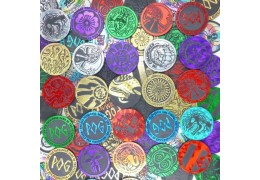
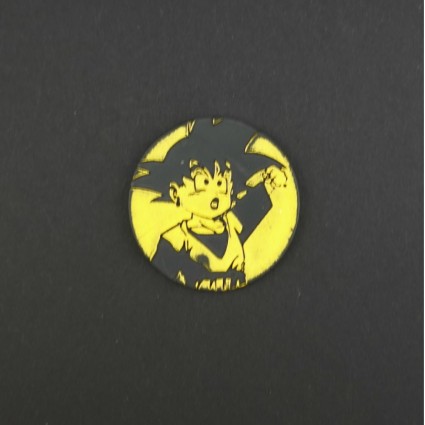
The Slammer is the key piece in the game of Pogs, a massive 90s craze. Unlike the regular Pogs, which are made of cardboard, the Slammer is thicker, heavier, and often made of plastic, metal, or resin. Its purpose? To be thrown forcefully onto a stack of Pogs to flip as many as possible and claim them. Players collected unique Slammers, sometimes featuring holographic, shiny, or aggressive designs. A true strategic asset, the Pog Slammer separated casual players from the true playground champions.
The Pog Slammer emerged in the mid-1990s alongside the global Pog craze. Thicker and heavier than standard Pogs, it served as the central tool that made the game possible.
Players stacked cardboard Pogs face down and threw the Slammer onto the pile. Any discs flipped face up were won. The Slammer’s weight and material significantly affected performance.
More than a tool, it became a personal statement. Different shapes and designs reflected player identity and strategy.
Visually bold, Slammers often featured metallic finishes, flames, monsters, or futuristic artwork, echoing 1990s aesthetics.
Skill mattered. Angle, spin, and force influenced outcomes, adding depth beyond pure chance.
Culturally, the Slammer defined the Pog experience. It symbolized competition, individuality, and the intensity of the trend.
Today, the Pog Slammer remains a nostalgic artifact. A compact object that carried the power to decide playground battles.
 Rétro Vs Vintage : comment ne plus les confondre ?
 Nostalgeek Creepshow Jour-28: VALAK.EXE — La Sainte Machine
Loose.
The Slammer is the key piece in the game of Pogs, a massive 90s craze. Unlike the regular Pogs, which are made of cardboard, the Slammer is thicker, heavier, and often made of plastic, metal, or resin. Its purpose? To be thrown forcefully onto a stack of Pogs to flip as many as possible and claim them. Players collected unique Slammers, sometimes featuring holographic, shiny, or aggressive designs. A true strategic asset, the Pog Slammer separated casual players from the true playground champions.
check_circle
check_circle